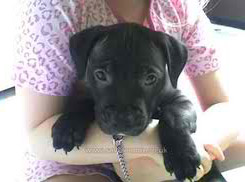
Tuesday, June 12, 2012

Alas Lennox, We Hardly Knew Ye: FINAL UPDATE: LENNOX RIP


It is morning here in the Eastern US, finally a sunny beginning in Florida after days of rain. But the sun is dimmed for me today with the news from Belfast that the High Court has denied the last appeal for Lennox, the dog doomed by a dressmaker’s tape.

Those of you who know me know that, when it comes to dogs, especially those accused of aggression toward humans, I am not all sunshine and unicorns.  I am a realist, and know well that there are dogs that are dangerous.  Not every dog can, or even should, be saved.  Thirty of them that have killed humans have passed through my hands.  Yet I demand, from myself, two things: one, that I search for the total story behind an attack, both the pretty and the gruesome, and that secondly every single dog gets a fair, fact- and observation-based evaluation, without presumption of guilt or innocence, and as free as I can make it from bias based on type or breed.

This has brought criticism.  People have asked “How can you say that (breed of dog) is not vicious?”  They make sweeping assumptions based on their perceptions of the exterior of the dog.  This is exactly what happened with Lennox.  Massive assumptions have been made by the Belfast Council based on physical characteristics that have nothing to do with temperament or behavior, and those assumptions have now cost the dog his life.  Lennox was, remember, not a dog that had bitten, threatened, or even particularly worried anyone.  Lennox had been lawfully, openly registered for five years with no reports or incidents before being seized for his looks alone. 

The “evaluation” of Lennox’ behavior, after seizure, that the Court has accepted lock, stock and barrel was  by a police dog handler, not a behaviorist-or even someone familiar with the variety or individuals of the type of dog Lennox is accused of being.  The police dog handler is, by virtue of his experience, trained in evaluating police dogs-but there is nothing to indicate the man’s expertise extends beyond that technical and specific field.  Frankly, from the videos I have seen and the reports I have gotten, I agree with Mr. Talleck-Lennox was not suited to be a police dog.  But then that was never the question, was it?  The real question was whether Lennox, a quiet and stable assistance dog for a young person, was a threat to the public in Belfast.  And by the latest decision, apparently stable, quiet assistance dogs that have large heads are dangerous in Northern Ireland.

Dangerous dogs have many faces.  I have seen dangerous dogs that looked like Pit Bulls; and like Huskies, and Rottweillers, and Chihuahuas, and Labradors, and Goldens…and on it goes.  They have as many faces and as many masks as human killers.  Yet they all have one thing in common; they have exhibited observed behavior that shows they present a clear danger, or have behaved in a way that caused serious injury or death.  There may be, for animals that have not yet caused serious injury, the possibility of rehabilitation and retraining with dedicated management and care.  Others are simply too far gone, and those must be either managed in isolation by skilled handlers or destroyed.  But Lennox was neither of these.  Lennox was just a dog.  A service dog.  A member of a family that had never even run afoul of the local constabulary for a wild Saturday night at the pub.  Lennox is a clear victim of discrimination based on physical appearance, and adjudged a threat for that reason only.

My family, back several generations, came from the UK and Ireland.  Although I have never been the victim of such, I know from history that my ancestors were victims of discrimination when they came to the US, discriminated against because they were Irish.  Yes, I have seen the old signs “Irish not Welcome”.  I have heard the ditties about the “dirty Irish” once sung by children and adults alike.  Perhaps that is why I am surprised that the Irish Court has perpetuated the same divisive discrimination that their own, our own, have suffered. 

For now, although we mourn Lennox and grieve with the Barnes family, we have to make Lennox’ loss stand for something, mean something.  We can’t just hang our heads and cower at the local, drowning our outrage.  We, and I mean we as dog owners and caretakers and trainers and lovers and family must work to eliminate discriminatory laws in Ireland and the UK and the US and Australia and wherever they are.  We must demand that dogs be given a fair shake, whatever they look like.  We must demand laws that adequately and firmly address bad behavior, whatever mask it wears, but that behavior be quantifiable and clear, unaffected by physical type or perceived cuteness.  A nasty Cocker Spaniel may well look like an angel while showing behavior more appropriate to a jackal. Behavior is behavior and is observable, definable, and quantifiable.  We must demand clear behavior based laws and determinations.

In the next few days I will be seeing a new client.  The behavior described to me on the phone consultation has me very worried.  This dog (not a Pit Bull) is going to grow into a large dog that will have the physical strength to potentially be a threat.  Yet when I meet this dog we will be starting from ground zero; I will observe, document what I see as behavior, discuss the dog’s background, training and past behavior, and I will make recommendations based on that data-not on what the dog looks like.  If Lennox’ loss is to mean anything we must all work to make that kind of evaluation the standard, not the exception.

My deepest condolences go out to the Barnes.  I regret that I never got to meet Lennox.  I can’t honestly say that I would have given Lennox a clear pass; that I never know until after I work with a dog, one on one.  But Lennox would have gotten a fair evaluation, documenting the behavior seen and quantified, from square one.  The size of his head would not have mattered-it would have been the size of his heart that counted.


LATER UPDATE:  Please see my update of 06/14/2012.  Lennox has NOT been killed as of 06/25/2012.  The fight must go on!  Please do not give up on this poor boy.  Victoria Stilwell is still fighting, as she has for months, for Lennox' release and I happily, and fully, support her efforts for a reasonable conclusion to this whole episode.  My first post on Lennox was in October of last year (not just now when it has become popular), and Victoria was already involved then.  She brought me in to advise and help.  Sarah Fisher and her crew in the UK have been doing their part, trying to bring professionalism and fair treatment to the case, which includes Sarah's own evaluation of Lennox.  All the 150,000 of you who have been long term supporters of this two year effort must stand solid and keep your efforts and energy up.  Please do not give up the fight!

FINAL UPDATE Wednesday, July 11, 2012:

Lennox was destroyed this morning in Belfast.  The world is a little poorer, and a little sadder today.  Victoria Stilwell and Sarah Fisher were on scene and working their best to the very end. I have to thank Victoria and Sarah for all their efforts and We MUST move beyond judging and anticipating behavior based on appearances to taking each person and animal as an individual. In the Nineteenth Century we proved that classifying people as "criminals" based on physical characteristics was grossly inaccurate. Why do we insist on following disproven, discredited pseudoscience to assess the possible behavior of dogs? 


Each dog is an individual, with particular characteristics that must be individually assessed. We must use the loss of Lennox to stop stereotypical, and indeed racist, assumptions.  Please don't let Lennox' loss stop the efforts to ban illogical and unjustified legislation, no matter where it occurs.  Bad behavior is exactly that-behavior.  Press for behavior based, logical, reasonable, and enforceable Dangerous Dog laws that address the real cause-human failure.

RIP Lennox-and I can only hope that you are finally free to run and be yourself.

Thursday, May 10, 2012

The Lennox crisis-a report by the Huffington Post

Today I want to thank Joan K. Smith of the Huffington Post for her excellent article on the continuing saga of Lennox, a dog seized and imprisoned for the last two years in Belfast, Northern Ireland.  As I have said before, this case is not longer about Lennox but egos...but instead of hashing out old ground, let me turn you over to Joan....

From the Huffington Post Online, 5/9/2012.  Copyright The Huffington Post. All images rights reserved to The Huffington Post or other owners.

An Outrage in Belfast: The Sad Case of Lennox, the Dog

Posted: 05/09/2012 7:50 pm


Those of us living in what we consider free societies often feel secure that if we comply by laws, pay our taxes, and maintain other civic duties we should not live in fear of government officials entering our homes and disrupting our families.
2012-05-09-lennoxbrookesmall.jpgNot so in Belfast, Northern Ireland, where a tragic situation that is nothing short of Orwellian has played out for over two years. Lennox, a Labrador/American Bulldog mix, was seized from the Barnes family under the U.K.'s "Dangerous Dogs Act" (DDA) and sentenced to death due simply to his physical measurements. Under the DDA, if a dog's measurements are in line with their standard for "pit bull types", the dog can be seized without warrant and sentenced to death (a recent amendment stipulates the that the dog must also be proven dangerous). The DDA assumption that physical traits dictate a dog's behavioral tendencies is contradicted by well known dog experts and virtually every major veterinary, animal control, and emergency medical associations worldwide - all of whom have spoken out against these laws .
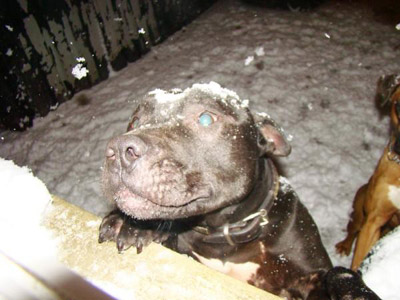
It's hard to image a more unlikely target for the law than the Barnes family. Lennox is an American Bulldog/Labrador mix who had never been reported for any act of aggression, and in fact had never exhibited a single sign of misbehavior. He is not only a family pet, but has served as a therapy dog and soulmate for a disabled girl, Brook Barnes, who is now 13. Lennox's family had provided a stable, loving home environment. He had been microchipped, neutered, DNA registered, insured, and even had a valid city-issued dog license. By all accounts, Caroline Barnes, a former veterinary nurse, is a model pet owner.
2012-05-09-lennoxsm.jpgYet on May 19, 2010, the City of Belfast saw fit to turn their world upside down, in the most baffling way imaginable: Two dog wardens (who operate under the auspices of Belfast City Council) came knocking at the Barnes door bearing a warrant with an entirely different address;


The rest of the article can be read here at the Huffington Post:

http://www.huffingtonpost.com/joan-k-smith/an-outrage-in-belfast-the_b_1504739.html

Sunday, April 29, 2012

Helo Update-Success!

After all of the heartache and waiting, we have a decision in the case of Helo, the McKeesport Siberian Husky.

For those who aren't up to speed, Helo was accused of killing a three day old infant in McKeesport, Pennsylvania.  I was called in by Helo's defense team to look at the case and to evaluate Helo as to any danger he might present to public safety.  And understand - when I went in we had a clear agreement - if I evaluated Helo and looked at the case and found that Helo was a vicious dog, the owners agreed that he would be destroyed without question.

My investigation showed a number of things: first, there was no evidence that Helo actually committed the alleged attack.  Two small smudges of what may have been blood on his fur were unconvincing-there simply wasn't enough blood, and the two small markings markings were transfer, not blood drops or splashes.  More importantly, there were three other dogs present, two of which were never even seen by Animal Control or Law Enforcement, since they were locked in the basement for security reasons.  That was insane and irresponsible.  To deliberately not examine two dogs that were barking and lunging at the basement door while seizing and blaming the friendliest dog in the house because he was the easiest to handle goes beyond unprofessional.

But ultimately the facts came to the front.  I evaluated Helo and found him to be a personable, friendly, non-threatening, well adjusted dog that presented no more danger than any other dog seen walking quietly down the street with an owner.  He was well mannered, compliant, easy to control and very accepting of human interaction.

Friday, April 27th, the Court made it's decision.  Helo will be relocated out of Pennsylvania to a sanctuary where he will have both human and canine friends and family.  He is not designated "Dangerous" as the burden of proof for that designation has never been met by the DA.  He will be able to live out his life safely, in loving and peaceful surroundings without fear of retribution from senseless humans looking for a scapegoat for revenge.

Yes, this was a tragedy.  An innocent child died horribly due to human neglect and failure to act in a reasonable and responsible manner.  My sympathies go out to the poor infant who never had a decent chance.  He could have made great contributions to his community and the world, but we will never know.

We do not know what happened to the other dogs in the home as the DA released the one other dog that was given a quick "once-over" and never seized the two dogs that were more apparently a threat.  We can only hope that those dogs never have the opportunity to victimize another child.

Helo will live his life away from those who would blame him for human failings, and possibly seek retribution.  Good luck Helo, and I hope to meet you again.

For those who would like to learn how to better investigate such tragedies, and help us save lives by preventing such heart-wrenching situation in the future, please join us at the National Dog Bite Investigation, Prevention and Treatment Conference in Atlanta, GA, May 4th.  For those who can't make it to Atlanta, keep your eyes peeled for updates as we want to take this valuable information on the road later this year to get the message out-no one needs to suffer or die from dog attack.  Dog related fatalities and injuries are very preventable.  Please join us in eliminating this risk to ourselves, our families, and our dogs. Bookmark us at http://www.dogbitecon.org/home

And don't forget poor Lennox in the UK.  His next hearing is scheduled for May 24th in Belfast.  Lennox, to remind everyone, never bit, threatened, charged, or even bothered anyone.  He was minding his own business, licensed and vaccinated at his home, when he was seized by Animal Control officers because he looked like a "regulated dog".  His full story can be found here:   http://savelennox.co.uk   There are over 127,000 supporters of Lennox around the world.  Join them in pressing for an objective, experienced, expert evaluation of Lennox.

Wednesday, April 25, 2012

Saving Helo


Should we save Helo?

Those who have been reading this blog for a while know that I have investigated a number of human fatalities that resulted from dog attacks.  As a result of those investigations I have handled and evaluated a lot of dogs.  In almost every case the dog involved in a human fatality is killed afterwards.

Why are these dogs killed?  It seems a simple enough issue-dog kills human, then human kills dog.  But every once in a while we need to look at why this happens.  It may be automatic and seem, well, natural, but we need to remind ourselves why.

In most cases the reason is clear-the owners of the dog want it destroyed.  This is an understandable reaction, especially if the dog is responsible for the death of a family member.  Regardless of why or how the fatality came about the emotional baggage would be debilitating.  We have to respect the wishes of the owners of these dogs, even if we might disagree with their decision.  It is, ultimately, their decision to make.

More complex are cases where the mandate to destroy the dog comes from the government.  The government has, under the law, the ability to perform a legal “taking”, a seizure, of contraband and other items under specific circumstances.  A vehicle can be seized and disposed of if used in certain crimes.  Ill-gotten gains can be taken.  Clearly prohibited items, such as illegal drugs, can be taken and destroyed.  All of these examples have been decided to be in the interest of the State.

When it comes to dogs the case becomes murkier.  The primary reason given for the destruction of dangerous animals is for public safety.  We certainly don’t want vicious animals running around loose and attacking people.  That is a reasonable action.  Frankly, many of the dogs I have evaluated after causing human deaths have been a clear risk to people.  The triggering action for the attack may have made sense in doggie terms, but the reaction to that provocation was excessive and inappropriate.  The magnitude of the reaction made the dog a clear danger in any future incidents, and thus the dog was rightly destroyed.  Perhaps some of these could have been sheltered in tightly controlled environments, but in all honesty the number of such safe places is very limited.  The better alternative was humane destruction.

A common second reason for destroying these animals is liability.  Cities, counties, and other jurisdictions are seen as deep pocket targets for litigation.  A jurisdiction that releases a dog involved in a fatality may have exposure down the line if the dog ever bites again.  Sadly, I am certain there are litigators that would hover expectantly around such an animal, just waiting for the chance to find an excuse to file action for a settlement on anything the dog might do, or even be accused of doing.  This issue can be settled with appropriate releases and other transfer of liability, but even if these releases are solid actions may still be attempted by those looking for a quick settlement.  I understand this concern, and if a dog is being destroyed for this reason the agency simply needs to acknowledge the fact and move on, rather than hiding behind excuses.

Lastly, in my mind, and saddest of the choices, is the fact that some people want revenge, plain and simple.  The dog killed a person-most likely a child.  Their attitude is that the dog must die, preferably immediately.  The dog has done the unforgivable and ‘justice’ must be swift and certain.  This is the same attitude that once led to the construction of a gallows while the trial was in progress-and too often results in the execution of the dog on scene.  I have talked often about the need to adequately process the animal(s) involved and that there should be no rush to judgment or execution.  I do, however, as an old police officer, understand the immediate stress responders have at the scene; a body, often a baby, is right there.  The alleged suspect is also right there. The responder my have never seen a dog fatality before.  In this case the suspect is an animal, with a lesser expectation of fair treatment (in some minds), and with little provocation or excuse the responders can use immediate deadly force to protect themselves from a perceived threat.  Revenge is swift and certain, and rarely does anyone question the actions of the responders.

The problem here is the same problem we have with jumping to swift judgment in human-caused cases: what we see, or think we see, may not be the whole story.

And that brings us to the case of Helo, a Siberian Husky in McKeesport, Pennsylvania, accused of killing a three-day-old infant.

The public story seemed pretty clear.  Press reports stated that the child’s mother left the three day old boy unattended for just “two minutes” to use the bathroom, and during that brief time the dog severely mauled the infant.  These kinds of incidents do happen.  According to the press, the dog had been in the home for less than two weeks and the baby had just come home from the hospital.  There were the expected quotes about the “horrible injuries” that the poor child had suffered.  The dog was expected to be destroyed.

But then he wasn’t.  And then he was seized again.  And then he was to be destroyed.  And then questions began surfacing-and I was called in.

It turned out that the facts were far more complex than the press reports indicated.  I am not going to go into all the procedural foul-ups and legal missteps made in this case, but I will focus on a few physical, evidence based issues that made the case murky at best.

To begin, Helo (the accused) is a mostly white male Siberian Husky.  The child killed suffered serious injury to his head and face.  A substantial amount of blood was present (although confined to a very limited area-more on that later), yet Helo had only two minor smudges of blood on his fur: one about the size of a thumb print on the side of his face, almost under his ear, and one smudge smaller than a dime on the front of his left leg, above the ankle.  As a retired police officer familiar with many crime scenes, both of these smudges look just as they sound-smudges.  Not drips, splashes, or spatter, but smudges.  These are more consistent with transfer of blood from another object, not the active dispersal of blood from a fatally bleeding victim.

The only marks on Helo were these two small smudges-nothing else.  I find it difficult to believe that a white dog, accused of biting a child and causing an injury that exposed the child’s brain, would only have two tiny smudges of blood on him.  That must have been a very fastidious dog…or perhaps just not the right dog?

Now let us add in the fact that there was not one, but four dogs in the home at the time of the fatality.  Helo was blamed because the mother told police that she saw Helo “…standing over the baby…”.  Not biting the baby.  Not hurting the baby.  Standing over the baby.

The second dog in the home, a dark colored Pit Bull mix, was allegedly with the mother in the bathroom (on the second floor) the entire time.  This dog was only given a cursory visual “check” by the responding Law Enforcement and Animal Control authorities.  Yet I can tell you from personal experience that blood on a dark colored (especially if brindled at all) dog is difficult to see.  I have, in fact, only discovered the extent of blood on a dark brindled dog by feeling the stickiness on the fur when handling the dog.  Yet no tests were done on dog #2, not even simply wiping down the dog with a white piece of gauze or paper towel. 

Further, this second dog was supposedly in the bathroom with the mother-but the mother claims that she was only in the bathroom for two minutes.   Yet the timeline of the attack, as documented by police reports, shows that the mother was talking to her boyfriend (from the bathroom presumably) beginning at 9:15 am.  The mother stated to police that she discovered the baby injured, and Helo standing over him, just as she finished her two minutes in the bathroom.  She then called 911.  Yet police records show that Emergency Services and police were not called until 9:32 AM, seventeen minutes after the conversation with her boyfriend began.  Now, we all know how difficult it can be to have a dog directly underfoot in a bathroom while we are attending to personal needs.  As a man I can only guess how enjoyable that would be if I were a woman who had just given birth trying to deal with personal hygiene, perhaps involving sanitary pads, etc.  I don’t think it unreasonable for a person who has mistaken a seventeen minute conversation for “two minutes” to have lost track of the second dog for even a few minutes.  Things happen-we get distracted.  Time is fluid when we are discussing things we care about with our loved ones.

The lack of a thorough examination of the second dog is regrettable, but what becomes more outrageous is the handling of the other dogs.  Remember them?  There were four dogs in the house-not two.  And guess where the other two dogs were when EMS and police arrived?  Locked behind a closed door in the basement-barking and lunging at the closed door!  Yet neither police nor Animal Control ever even looked at these dogs, for “security reasons” according to the police reports.  Security reasons?  You have police and skilled Animal Control personnel on scene to assist in handling the dogs, yet they fail to even visually check those two dogs for “security reasons”.  That certainly makes sense-blame the friendliest dog on scene, seize (briefly) the other friendly dog while not adequately checking him for evidence, but leave the two difficult, barking, lunging dogs because you are afraid to handle them?  In the wake of a human fatality?  To me this is one of the most incredible facts of this case.

To sum up so far: we have blamed the white dog with minor smudges.  We have taken but not examined the dark dog.  And we have left the two nasty dogs barking and lunging at the closed basement door.

Let’s look at the other physical evidence now.

At the time of the incident the baby had been left in a bathtub-like plastic carrier on the floor of the home’s living room.  The carrier, which had no safety strap, was jammed in between the couch and a mattress on the floor that the family-and their dogs-had been sleeping on.  The carrier contained a small pillow and a soft liner.  The baby had been left lying on his back, head on the pillow, when the mother went to the bathroom.  When she found the baby injured the baby was still lying on his back, still with his head on the pillow-and there were bite marks on the baby’s face, the top of his head, and the back of his head.  Yet he was still in the same place his mother left him.  This presumes that the dog(s) bit him, tore a significant wound across his face, literally opened the top of his skull, and yet never moved him out of the carrier-or even to a different area of the carrier.  A small fragment of skull was found, but that was within the carrier and a matter of a few inches from the baby’s head, still on the pillow.  I can’t frankly say that I have ever seen a situation where dogs dissected a target (toy, food or prey) and were so darn neat in their efforts as to return the scene exactly as it was before their actions.  Usually dogs are a least a little bit messier.

The bite marks are also a problem.  I was able to determine from a close examination of the autopsy photos that there were simple punctures and there were directional tears.  The directional tears were at contrasting angles.  That means the teeth involved pulled from different sides.  Although there were not clear enough full bites to absolutely identify or exclude any particular dog, I was able to identify two clear sets of canine tooth punctures-and the measurements were consistent with two different sets of jaws.   Now, we were only given access to Helo for measurements, but at least one set of punctures were inconsistent with the measurements of Helo’s canine teeth. 

The tearing injuries on the baby’s face were also a problem.  They indicated that the biter had pulled against the child’s flesh enough to tear completely through face and cheek tissue for several centimeters.  The force needed to tear that far is in excess of the weight of a three day old infant’s head.  Now, one might suspect that a dog could use a paw to hold a target and pull against it (as we have all seen with dogs dissecting soft plush toys or rope chews), but Helo had another difficulty here-he had a broken front leg that was in a cast.  With the couch on one side of the carrier and the mattress on the other side, a single dog would have had to maintain footing on a soft, irregular surface with one foot and hold the target (the baby) down with the other.  But Helo had a broken leg, in a cast, that was essentially non-weight bearing.  For Helo to have torn the flesh he would have had to somehow have juggled baby, carrier, and his own support with a single usable leg.

And we still have the scene problem.  If Helo did this all by himself, or even if two dogs pulled on the child, and there were bites to the front, sides, and back of the baby’s head-how did the baby’s body get repositioned back exactly as it started?

All these questions and more were bumping around in my head when I finally got to meet and physically evaluate Helo.  The video of the evaluation is posted on YouTube-search “Helos evaluation” or try


To summarize, I found Helo to be an active, personable, inquisitive young male Husky.  He readily sought human contact, was very responsive to directions and simple obedience commands, he took treats gently, and he allowed me to fully handle him with only slight avoidance of handling his healing leg.  I could take toys and food freely, without guarding or protective aggression, and was able to actually reach into his food bowl while he was eating.  He exhibited no signs of human-focused or dog-dog aggression.  He was, in fact, a pleasant and friendly dog.  If Helo had come into a shelter I was in charge of with no documentation of his history, his behavior would indicate that he was very adoptable.  My bottom line on Helo: this dog is absolutely not dangerous, and is no more likely to bite a person than any random pet dog one might encounter.

So now we go back to the initial question in this case: should Helo be saved?

In the human justice system we mandate that a person must be assumed innocent until proven guilty.  That proof must be to a standard of “beyond a reasonable doubt”.  In animal cases, sadly, guilt by mere presence or association is more often the standard.   In this case yes, Helo was present.  He had a small amount of blood on his fur, consistent with transfer from some other surface.  There were three other dogs present, none of whom were adequately examined.  At least some of the bite marks are inconsistent with Helo’s measurements.  Do we have reasonable doubt here?  Absolutely.  Is Help’s behavior during the evaluation consistent with a dog that I feel is clearly a danger to the public?  No.  Helo is again no more a risk to the public than any other dog.  If Helo is to be destroyed, it will not be to protect public safety.  As we discussed, liability can be dealt with by attorneys and releases.  The only reason for Helo’s destruction will be for revenge, plain and simple.

Sunday, April 15, 2012

Must Attend! National Dog Bite Conference, May 4th

A little self-plug here, along with a HUGE opportunity for readers to attend an awesome and educational event in Atlanta, GA on May 4th (as if you need a reason to go to Atlanta).....

And for Animal Control Officers, we still have a number of scholarships available for you to attend since we know your agencies are broke, broke, broke.....

I will be joined by Victoria Stilwell, trainer, author, and star of "It's Me Or The Dog; Dr. Mark Wulkan, Chief of Surgery at Childrens' Healthcare of Atlanta; Claudine Wilkins, legal and legislative expert; and other leaders in the field of dog bites and surrounding legal, medical, and practical issues.  Come and learn, socialize, and share with others your questions and experiences.  Help us reduce the number of needless injuries that occur every year.


Mark your calendars to attend an important conference presented by The State Bar of Georgia, The Animal Law Section, and Children's Health Care of Atlanta:
 The National Dog Bite Investigation, Treatment and Prevention Conference:
A Symposium by and for Lawyers, Judges, Medical Professionals, First Responders (EMS, ACO, ER), Veterinarians & Technicians, Animal Control Officers, Police, Dog Trainers, Educators, Shelter Directors and Legislators addressing current issues affecting the education and interaction of professionals in preventing and treating dog bites and victims.
  Register Early. Space is Limited.
 Limited scholarships available for Animal Control Officers.
Click here for more information: http://www.iclega.org/programs/7967.html
 For information contact: info@georgiaanimallaw.org

OR GO TO: http://www.dogbitecon.org/


Tuesday, February 14, 2012

What is Animal Rescue: Part 1


We talk a lot about Animal Rescue and the various efforts to Rescue and Save the Animals (yes, you can usually hear the caps).  Right now we are working hard to get the Florida Animal Rescue Act passed by our State Legislature and save lives.  But we have to wonder some times; what is Rescue, how does it work, how should it work, and what are we Rescuing animals from in the first place?

There seem to be two major segments of Animal Rescue out there; disaster response rescue and everyday companion animal rescue.  Although Rescue groups often deal with both faces of this challenge, they are two distinct issues.  Let’s look at disaster response first and try to get a clearer picture of our mission.

Last year North Carolina and Virginia were hammered by Hurricane Irene.  New York and the rest of New England faced a once-in-a-century storm.  There was the outbreak of tornados in the Birmingham/Tuscaloosa Alabama area, a tornado that devastated a good swath of Joplin, Missouri, tornados in New England, and the creeping disaster that was the flooding along the Mississippi Delta. These displaced and took many human lives, and likewise impacted animal lives, both companion and commercial.  During each of these disasters phone and ‘Net lines were buzzing with concerned folks desperate to “Save the Animals.” And saving was done, and will continue to be done, by many dedicated ground teams, shelters, shelter support staff, and volunteers.

But we have to be clear what we mean when we want to “Save the Animals”? Save the animals from what? For what? Which animals?  We intend good things, but what is our true mission?

Let me give a quick example of good intentions versus a defined mission. During the early ground operations in New Orleans after Katrina and Rita one of our volunteers brought in a baby alligator to be “saved”. The alligator was about two and a half feet long. It was captured in the rubble of an apartment complex, just off Lake Ponchartrain. 

The conversation went pretty much like this:

Me:  “Bless your heart*, I appreciate your concern, but what is that you have?”

Vol:  “An alligator.  A baby alligator.”

Me: “Ok.  Tell me-where are we?”

Vol: “New Orleans.”

Me: “Which is in….”

Vol: “Uh, Louisiana?”

Me: “And where do alligators live?”

Vol: “In swamps…”

Me: “Swamps where?

Vol: “…Louisiana”

Me. “Exactly.  We are not saving alligators…THEY BELONG HERE. THERE IS NOTHING TO SAVE THEM FROM, except maybe their PARENTS.  PUT THAT BACK.  He (or she) will be just fine.  Trot across the parking lot to the levee, and put that fellow back in Lake Ponchartrain where he belongs.”

I know I hurt the poor volunteer’s feelings-they were just trying to “Save the Animals”. And in northern Illinois, or Michigan, or wherever the volunteer came from, alligators might need saving. But along the Gulf Coast we residents consider them pests. Large, prehistoric, small-dog-eating, golf course infesting pests. They are part of the local ecosystem, part of the natural world, part of (cue the Disney song) “the circle of liiiife…..! They don’t need saving. They belong here.

This was a case of unclear mission goals.  The volunteer with the alligator wanted to Save the Animals, but lacked an understanding of the specific parameters we were focused within.  Our mission after Katrina was to address companion animal issues-lost pets, endangered pets, abandoned and/or lost livestock.  We were not there to collect and “save” an entire ecosystem.

During disaster response, we must first understand what animals we are saving, and from what.  Typically there are two clear classes of animals we are interested in: companion animals (pets) and livestock/agricultural animals, most often horses, cattle, and barnyard fowl.

What are we saving them from?  Well, of course we are saving them from the immediate threat.  Drowning in floods, injured or dead from falling debris or trees, in the case of New Orleans the poisonous soup that it became when all the chemicals in factories and under people’s sinks merged together post-levee failure; the range of dangers for pets and livestock is tremendous.

These threats loom largest for those animals left behind by their owners.  We saw plenty of that in Katrina; families left their animals behind, leaving food and fresh water available, assuming that they would return to relatively secure homes and properties and to their animals in a day or three.  We know how badly that worked out now, with the levee failures and the complete closing of New Orleans for weeks.  One dog that I personally rescued had been trapped in his house for 49 days.  HE survived, but too many didn’t.  Drowned animals were commonplace.

So we save the animals, at least those that are not native-and perhaps some of those if they are injured-from injury, drowning, poisoning, and other immediate hazards.  We round them up, clean them up, dry them off, and give them wholesome food.  We tend to their wounds and begin to return them to gentle, positive companionship with humans.  We are indeed saving them from valid, clear threats.

But what are we saving them for?  For dispersal to well meaning people all over who want to also “Save the Animals” by opening their homes and hearts to these needy creatures?  Despite events that transpired after Katrina, the answer here is a resounding “NO”.  In a disaster response, our first and foremost goal and mission is to save these animals so they may be returned to their rightful owners.  We are not there to conduct a massive collect-and-adopt mission.  We are there to rescue and safeguard the animals at risk until such time as we, or other authorities, can identify and reunite the animals with their human families.  In a disaster response this reunification is our goal, our mission, our reason to exist, our lifeblood.  I can tell you personally that, when a family returns to a scene to find their home destroyed, their possessions scattered on the tide, their lives in ruin, the looks on their faces when they realize their pet is safe and cared for are worth every second of work and struggle.

But there is a caution that we must keep close to our hearts.  When we rescue these animals, they are only temporarily in our care.  We are their saviors, but not their keepers.  We have no authority or place determining if their owners are fit to have their animals back.

This situation came up during our post-Katrina response.  Well meaning, kind and concerned rescuers had issues with a number of things they saw.  These kind folks, first off, resented the owners for leaving their pets behind.  Too many people expressed to me their disgust at what they considered outright abandonment.  I even, at first, found it difficult to understand until I learned that most people had been told, or believed, that they would only be gone a brief time.  Residents of New Orleans, like many Gulf Coast communities, had evacuated before.  Most times they leave for one to three days and then are back at home, cleaning up and back on track.

In Katrina, an unpredicted element intruded.  The city was generally secure, with some middling damage, until the levees broke.  Houses that had been safe and dry were now underwater, as much as six to ten feet or more, depending on which neighborhood you were in.  The residents who fled, and those who stayed behind, never truly expected this to happen. 

The waters came in fast enough in some locations that we later found dinner dishes still on the tables, food on the stoves, lives interrupted in the middle of normality.  And we found animals drowned in houses, sometimes loose in the house, sometimes in crates and kennels, and too often accompanied by their owners.  In the home of one person who was apparently a hoarder, we found seventy two dead animals, dogs and cats, scattered around the house.  Some cats had even taken refuge in the attic, and then drowned trying to escape from the eaves as the water covered the roof.  Some animals were in attics, mute testament to their loyalty as they died in their owners’ laps.

But we found them, mostly unaccompanied, and rescuers were appalled.  How could these people leave their pets?  Why could they not fit a small dog into a car, or take their cat?  What physical possession could have been more important than their companion?

And some rescuers began trying to second guess the owners, trying to place their own values on the owners of the survivors.  Some animals were, frankly, not kept to the standards that many of us were accustomed to.  The animals were chained, tethered, or simply running loose.  The animals were not always groomed, were not always as friendly as they expected, were not kept….like our animals.  And some rescuers began making decisions as to whether the owners deserved their animals back.

This was, despite good intentions and sometimes legitimate outrage, simply wrong.  This was not the mission.  This was not their place.  We/they had no business making such decisions.  Good or bad, well intentioned or hopelessly clueless, the owners had every right to have their animals returned.

Situations like this are why we need close control of and accountability for rescuers in disaster responses.  The rescue mission must be narrowly defined; first, respond and collect all the animals that meet your mission goals-in the case of Katrina, companion and livestock animals.  Second, stabilize, house, identify and document all the animals you have.  Third, work fervently to return and reunite the animals with owners without removing them from the immediate area where they can be reasonable recovered.  And finally, if all else fails, THEN begin adopting/fostering/placing animals with new homes both in and out of the affected areas.

There are a few ways we can proactively design our responses to lessen the likelihood of mission drift.  We can pre-credential our responders, building a database of trained, qualified people who understand the issues we will face and the system within which they will function.  We can limit access to disaster areas to those credentialed and trained persons.  We can set out our mission goals and rules clearly from the outset, and have accountability measures in place.  We can set up receiving facilities designed for safe containment, immediate medical treatment, and behavioral assessment and management to ensure the animals are kept safe until they go home.  Finally we can document, advertise, and follow up on recovery locations to try and reunite pets and families long before we start shipping them out and away, sometimes to places where the owners may never find them again.  I feel that these are the basic requirements of disaster response and rescue for those who want to “Save the Animals”.

But disaster response is, almost by definition, the exception.  What about day to day rescuing of needy and discarded animals?  That subject is for next time.

* NOTE: Here in the South you hear people say "Bless your heart..." a lot.  That is not because they are all pious and well wishing.  In much of the Southern US, the phrase "Bless your heart" is code.  It means "Are you really that stupid?"  Of course, true Southerners are far too well mannered to straight out say that.  Thus, "Bless your heart".

Friday, January 6, 2012

What is a Behaviorist?


I am asked fairly regularly about trainers and behaviorists and about recommending a particular person or group.  

The issue of who is or is not a behaviorist is unclear in our current training environment. "Behaviorist" is a tag that generates lots of marketable attention. Claiming to be a behaviorist specializing in aggression or dangerous dogs is an even bigger selling point, yet determining qualification to treat aggressive dogs is a serious issue due to the danger to both the public and to the dogs.  Today we have people popping up claiming to be "dangerous dog rehabilitators" or "aggressive dog specialists".  Some of these folks have extensive experience and are very talented; some are less so, and some, sadly, are frankly in the mix to be perceived as the baddest in the 'hood.

I do not label myself as a behaviorist.  My certification through the Council for Certification of Professional Dog Trainers is as a Certified Behavior Consultant-Canine-Knowledge Assessed.  That means I have met certain criteria of education and experience, provided professional references, documented such, been peer reviewed, and then passed a certification exam.  This certification requires that I pursue continuing education in the field to maintain my standing.  I also have a B.S. degree with concentration in Psychology.  That does not, in my mind, make me a behaviorist.

I reserve the title "Behaviorist" for two select groups of people; Veterinary Behaviorists-people with degrees as Veterinarians who pursue additional education in the field of behavior and obtain that Board Certified designation, and Certified Applied Animal Behaviorists, those individuals with Doctoral degrees in animal behavior.  These two groups of professionals are the ones that I feel have earned the term "Behaviorist".

That is not to say that others are deficient.  I look at the field of animal behavior work as similar to the medical field.  Board Certified specialists (cardiologists, neurologists, etc.) are at the top of the field.  They have a medical degree and extensive additional training.  They are the level of Veterinary Behaviorists.  

Experienced behavior consultants certified by recognized, professional, peer-reviewed groups (CCPDT, the International Association of Animal Behavior Consultants, and the International Association of Canine Professionals come to mind) are more at the level of a Physicians' Assistant or a Nurse Practitioner-we can do a lot, but we are not the top of the food chain. There are certainly cases that are beyond our experience and training.  We cannot perform medical interventions like prescribing medication.  

Similarly, certified dog trainers (such as CPDT-KA, CDT (from IACP), KPA (by Karen Prior Academy), Victoria Stilwell's Positive trainers, etc.) are talented and well trained resources that may or may not also have extensive behavior training but are recognized as highly competent trainers by a clear review process that includes references, existing and continuing education, and documented experience.

Scattered along the continuum below are experienced but uncertified trainers, comfortable in their skills in teaching non-problematic dogs manners and performance sports but not specifically addressing serious behavior issues.  Then come new trainers and those who have been pressed into dog training duties by their pet shop employers.  The talents and experience of these folks vary but they certainly contribute to the overall picture of helping owners and animals achieve a good, cooperative relationship.

When it comes to working with aggressive and potential dangerous dogs, I am very conservative in recommending "rehabilitators" or trainers.  The best choice is usually to consult a Board Certified Veterinary Behaviorist or a Certified Applied Animal Behaviorist.  They are trained and able to assess not only the dog's behavior, but also any potential underlying medical issues that may be contributing to the problem-and to medicate or treat those issues. The problem is that there are very few of these individuals in the Unites States. Not all of these folks necessarily specialize in aggression, especially when it involves truly dangerous animals; like all professionals they have their specialties.

The next line of referral is to certified individuals that have built up extensive experience over time and have elected to deal with aggression issues.  There are still relatively few of us; as of January 2012 there are about 60 CBCC-KA certified behavior consultants in the US, and not all accept aggressive dogs.  Other groups such as IAABC have similarly low numbers of certified individuals.  To determine which of these is appropriate for a dangerous animal requires a frank discussion with the individual about their past experience and training.  I can't speak for others, but my work is based on about fourteen years of training experience, and extensive dealings with varying degrees of aggression and ultimately dangerous dogs since about 2003.  I have dealt with animal that have killed humans-yet I don't claim to know it all.  I am still constantly learning. 

As far as general trainers, dog obedience instructors, etc.; there are many talented, responsible and dedicated people out there that do a lot of good.  Whether these folks are qualified to deal with advanced cases is a matter of individual experience and education.  The person at the pet store that teaches simple sit, stay, down may not be the right choice for an involved behavior problem, even if it does not involve aggression.  If one of these instructors is your only option, interview them extensively about their training and experience and get several references before committing to any program, especially if it seems to be a “one size fits all” program. 

Lastly, the group that I am most concerned with are those who think that being an "aggressive dog rehabilitator" is an advertisement of prowess. These folks are in it for the ego trip.  These "trainers" make a big deal of bragging that they deal with the "baddest of the bad".  They tend to display bite scars as badges of honor.  Sorry, but every bite that I have received is a sign that I made a mistake, and at least temporarily failed the dog.  They are not bragging matters. Depending on the venue, a bite by a problem dog may be a death sentence for the dog, even if the trainer made the mistake.  Ego should not enter the equation.

When choosing the person that helps you with problem behavior, or even simple training, please be very aware; regardless of the level of training or expertise an individual has, the trainer, behaviorist, or rehabilitator should not use any technique that they can’t do right in front of you.  You, as the animal’s owner and caretaker, should have the final say regarding tools and techniques.  If ANYTHING the trainer does makes you uncomfortable, ask questions and, if you still feel uncomfortable, ask them to try another strategy.  If they cannot comply-find another trainer.